
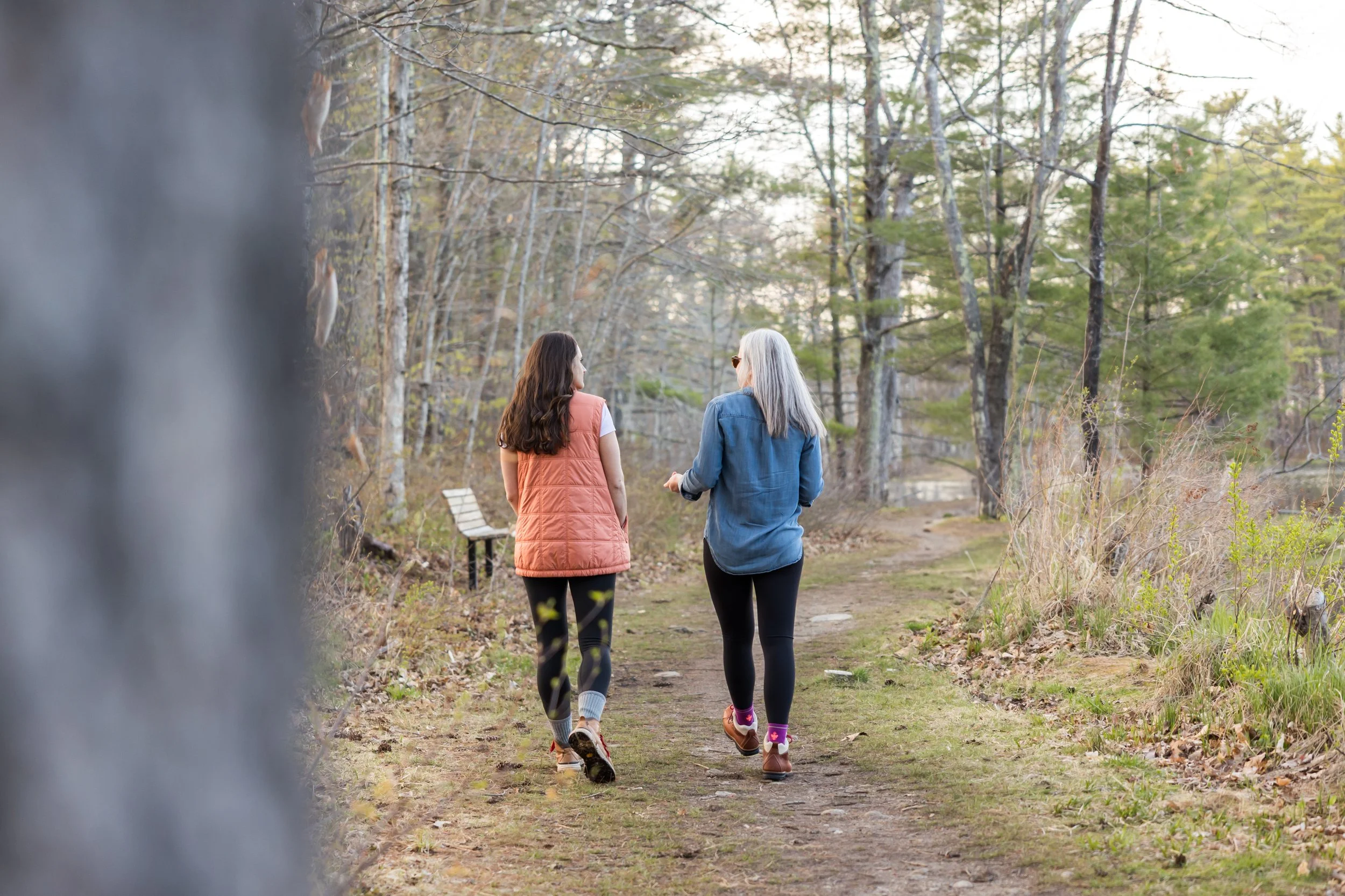
Walk & Talk Therapy
Movement & nature combined with traditional talk therapy on trails in Windham, Maine
What is
Walk & Talk
Therapy ?
Walk & Talk therapy blends traditional talk therapy interventions with walking outdoors.
This format of therapy is an alternative for clients interested in the healing power of both in-person talk therapy and gentle movement in a natural outdoor setting
While it may seem unique or new, many psychotherapists and mental health care providers worldwide offer Walk & Talk therapy as an option for their clients.
Each therapist will have their own unique approach or style of managing their Walk & Talk therapy sessions.
In research studies, Walk & Talk Therapy has been found to support a diverse range of mental health issues and is likely to improve overall physical and mental wellbeing.
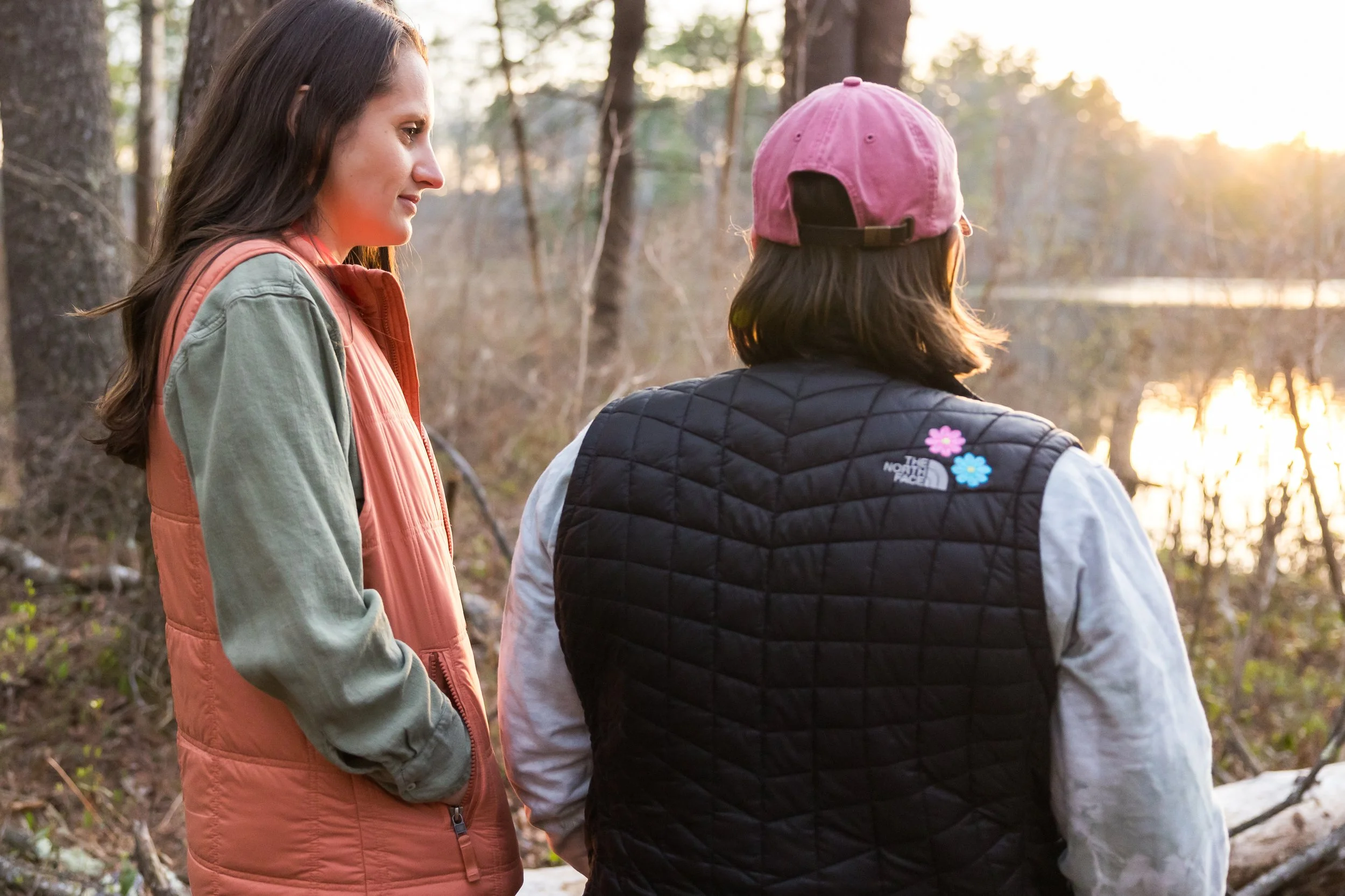
Emily Pettengill, LCPC offers
Walk & Talk Therapy
on beautiful public trails
in Windham, Maine
Logistics & Details:
1-on-1 walking sessions are offered on a weekly or bi-weekly cadence.
Sessions are moved to office if/when weather is too dangerous.
Specific walking location disclosed to serious inquiries only (see below).
Walking sessions take place year round. Yes, even in winter!
Questions? Check the FAQs.
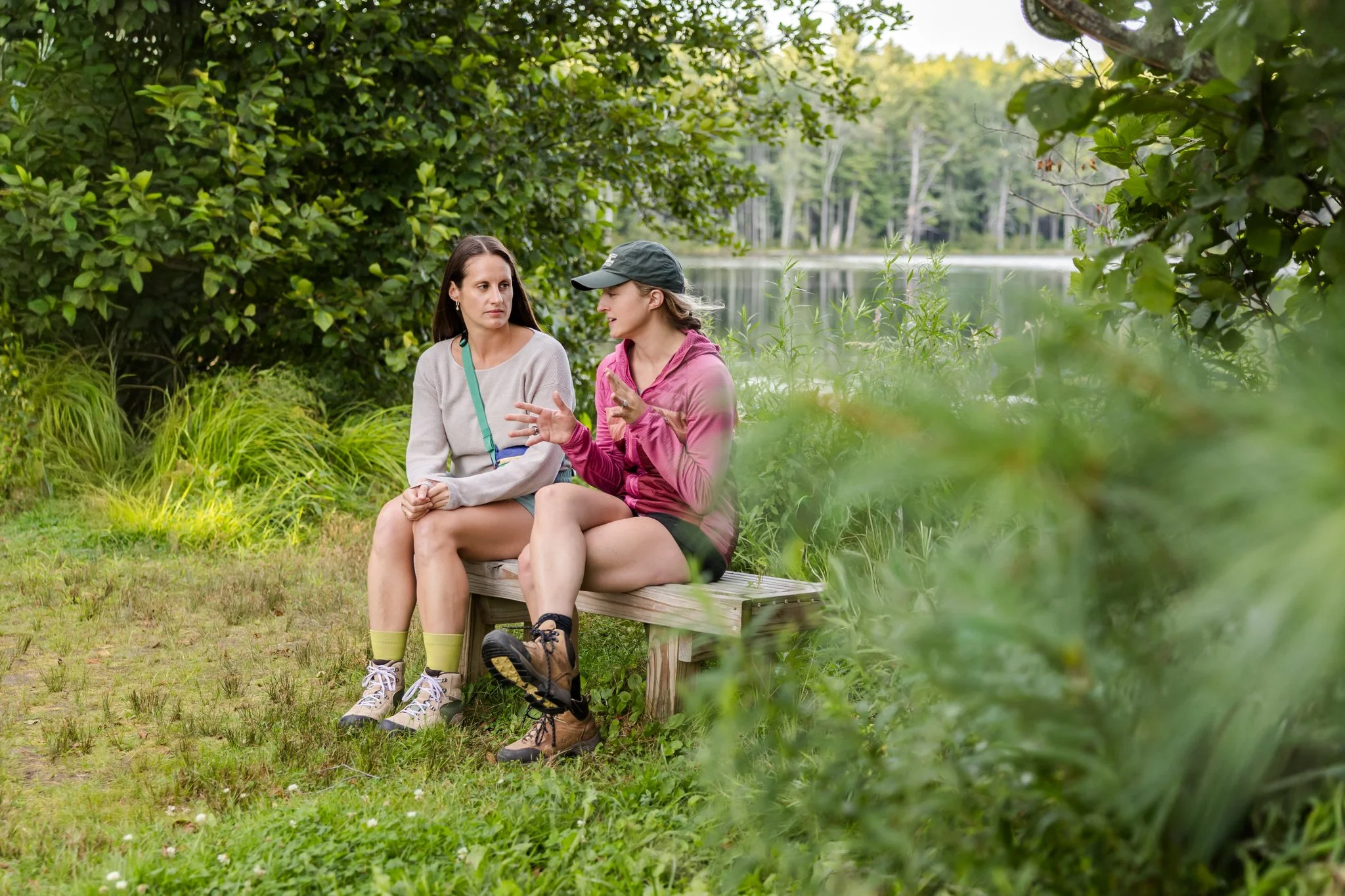
Interested in trying
Walk & Talk Therapy?
If you love the idea of taking your therapy sessions outdoors, please fill out the form below.
You’ll receive an automated email from me with details on how to schedule your first appointment.
FAQs
-
Walk & Talk therapy blends traditional talk therapy interventions with walking outdoors. While it may seem unique or new, many psychotherapists and mental health care providers worldwide offer Walk & Talk therapy as an option for their clients. Each therapist will have their own unique approach or style of managing their Walk & Talk therapy sessions.
-
I walk with my clients outdoors in nature in a beautiful public park with a trail that is a 1-mile loop that winds through the woods around a pond. We meet at the same location and at the same time every week, for consistency and familiarity. Each session is conducted with the same skills and expertise I bring to my clients who prefer sessions online or in the office on the couch. We focus on your mental health needs and life goals, discussing the steps you are taking to address them, while quite literally taking steps on the path side-by-side. My style is collaborative and integrative, meaning that I draw from a variety of different evidence-based therapy models in order to personalize treatment to your specific needs.
-
Research suggests that Walk & Talk therapy can yield significant mental health benefits, for both general health and well-being and for specific clinical symptoms and psychiatric disorders. Clients report feeling calmer, less inhibited, and more comfortable opening up when sessions are held outdoors, leading to improved mood and progress on therapeutic goals. I have personally witnessed that Walk & Talk therapy is supportive for a wide range of symptoms and diagnoses: depression, anxiety, PTSD, Austism Spectrum Disorder, social and relationship issues, grief, general life transitions, and more.
-
Yes – we can, we should, and we will. The point of therapy is to go deep, and Walk & Talk therapy is no different. Any topic that you would address in a therapy session where you are seated indoors can also be discussed while walking outdoors. Many of my clients report that once moving, they often find it easier and more comfortable opening up outdoors while walking side-by-side compared to indoors sitting face-to-face. Walking allows us to get the blood flowing in our bodies and connect on a deeper level to our minds, helping us access and work through the thoughts and memories we often suppress or have trouble opening up about.
-
My clients and I meet at the park in the parking lot at our scheduled time. The 50-minute session takes place on the trail in the park. The trail loop is one mile, and typically most clients complete between 2 to 2.5 loops (there are half loops and other trail variants that help us get the maximum amount of time out of each therapy session). We end in the parking lot where we started, confirm our next scheduled appointment, and say goodbye. Oftentimes I will meet with clients back to back, so sometimes I will walk the client to their car as we wrap up and confirm our next meeting time, and then find the next client’s car and pick them up for their next session so that we can keep to the schedule and start on time.
-
To protect the privacy and safety of my clients, I have chosen not to publicly share the specific location online. I will share that it is a public park in Windham with beautiful wooded trails that are maintained year round. If you are interested in knowing more about where Walk & Talk therapy takes place, don’t hesitate to reach out to me directly and I’d be happy to provide more information. You can email me at inquiries@emilyhopecounseling.com.
-
Outdoor sessions are mostly private, but not completely. We will occasionally pass people on the trails – mostly families, dogs, trail runners, and/or children fishing in the pond after school. Most of the time, people nod hello and continue on their way, minding their own business. A public park is just that – public. Therefore, I cannot guarantee confidentiality like I can in an office setting. We may be seen or overheard by other people, unlike a therapy office.
Here is what I can guarantee: I take my commitment to keeping my client’s information as confidential as possible very seriously. When we pass other people on the trail, I take a pause from speaking until we can continue walking in privacy. I do my best to appear to others as if we are two friends taking a walk together and do not disclose the nature of our relationship. Walk & Talk clients will be asked to sign a Walk & Talk Policy Waiver that outlines their rights and limitations to confidentiality in this format of therapy.
Clients that I work with are not only unbothered about confidentiality risks, but also excited to be outside in a natural setting. Some even find the act of routinely going to a public park where other people congregate therapeutic in the sense that it helps them combat loneliness and isolation. If you believe that potentially risking your privacy and confidentiality by engaging in outdoor therapy could be an issue for you, Walk & Talk Therapy with me may not be the right fit for your therapeutic treatment. -
We may! It depends on your needs for the session. Most sessions are spent walking for the entire 50 minutes, but sometimes a client will request that we sit. There are plenty of benches on the trail in private, secluded locations, and there are picnic tables at the beginning of the trail. And of course, if you are craving even more connection to nature and want to take a seat on the earth floor to “touch grass,” that is always an option I can support you with.
-
Dress for the weather! I always wear hiking boots and recommend that clients do too. If you don’t own hiking boots, please consider wearing sneakers that can handle the occasional muddy spot on the trail. In the winter, I recommend bringing a hat and gloves in addition to your winter coat. You may want to keep a water bottle or snack in your car for after the session. If you want to bring a journal or your phone for occasionally jotting down notes or analyzing a journal entry during a session, you are more than welcome to!
-
Yes! This is the best part of Walk & Talk – seeing the beauty of life and nature in all four seasons.
-
The question is when, not if. I reach out to clients well in advance when I first learn about “bad” weather. Everyone’s version of “bad” may differ. For example, some clients can tolerate walking in the humidity and temperatures over 85°F, while others don’t want to. Some clients find walking in the light rain therapeutic, while others may find it distracting. It is at the client’s discretion to let me know if they personally are not comfortable walking that day due to weather conditions, and we will move the session into the office or online, no questions asked.
When assessing weather conditions for safety, I make decisions that prioritize my clients’ well-being and minimize any weather-related risk of harm. This includes moving sessions indoors in the event of thunderstorms, ice or snow storms, highspeed winds (especially when branches or trees are at risk of falling in the woods), or extreme temperatures. I communicate any changes directly with clients prior to our scheduled session to ensure they know exactly where and how we will meet. -
I absolutely love dogs! I am open to clients who want to bring their dog who feel that their dog would be a positive, therapeutic addition to their sessions, and not a constant cause of concern or distraction. There are many other dogs that we will pass on the trail, your dog must be well-trained and friendly with other dogs. Clients who are interested in this option should plan on bringing their dog for a session as a trial – let’s see how it goes and decide together on whether or not it will be helpful to your therapy journey. Therapy is one of the only times in the week where you get to focus on yourself; we wouldn’t want your pup to inadvertently rob you of that much needed you-time!
-
If you are hoping to switch your session to the office or telehealth due to weather or illness, the answer is always yes. For all other reasons, we will need to have a conversation for me to better understand your needs and scheduling flexibility. Due to my scheduling constraints and commitments to other clients, I specifically block my Walk & Talk clients for certain times of day to avoid driving back and forth between the office and the park multiple times a day. Sunlight and Daylight Savings Time are also big considerations in how I am able to manage my schedule. If you think that you may not be able to commit to consistently scheduled outdoor therapy sessions long term, we can switch to the office or virtual sessions – but there is a strong likelihood we will have to change the time of your therapy sessions.
-
As a Licensed Mental Health Counselor (or Licensed Clinical Professional Counselor), my post graduate training years took place in a community mental health clinic that served folks recovering from addiction, struggling with homelessness, facing depression, anxiety, post-traumatic and/or acute stress, transitions into parenthood, relationship issues, communication skills, and more. In this setting, I worked with clients in-person and via telehealth in both one-on-one therapy sessions and group therapy sessions. When I moved to Maine and opened my private practice, I spent the first 6 months working from home with clients via telehealth and quickly became very burned out by the amount of screentime that was required by not having an office space. The idea to offer Walk & Talk therapy sessions in my community was a solution that kept my passion for my profession alive. I then sought out additional training from other licensed professionals to learn unique strategic interventions that make Walk & Talk special and effective when combined with traditional talk therapy modalities.
-
Yes. I am a two-time alumni of the National Outdoor Leadership School (NOLS), where I completed intensive wilderness expeditions in Alaska and Patagonia that strengthened my outdoor education, risk-assessment, decision making, survival and leadership skills – all of which play a role in my ability to offer outdoor therapy sessions confidently today. I also served as a Senior Leader of the Outback Program at Holderness School and had a role as Director of Nature at Wohelo Camps, educating and supporting young people engaged in their own formative experiences in the outdoors. From a young age, much of my education, career, and life has emphasized the importance of weaving nature into everyday experiences. I feel at home moving my professional skills outdoors, and it is an honor. tobe able to do so with my clients.
-
I do not! Every first session I ever have with new clients is an intake session via Zoom. During this session, I take notes the entire time, making sure to capture as many details as I can about your personal history and life experiences that have led to where you are today. After that first session, I never take notes during therapy sessions, whether or not they occur in the office, via telehealth, or outdoors in a Walk & Talk session. Many people are surprised by this, but I have an excellent memory recall and this is how I was trained. After a therapy session, I take very basic notes about what took place during the session and the general themes we discussed or coping skills we utilized. If you ever have any questions about this process, feel free to ask.
What kinds of mental health issues are supported by Walk & Talk Therapy?
Research suggests that Walk & Talk therapy can yield significant mental health benefits, for both general health and well-being and for specific clinical symptoms and psychiatric disorders. Clients report feeling calmer, less inhibited, and more comfortable opening up when sessions are held outdoors, leading to improved mood and progress on therapeutic goals.
I have personally witnessed that Walk & Talk therapy is supportive for a wide range of symptoms and diagnoses: depression, anxiety, PTSD, Austism Spectrum Disorder, social and relationship issues, grief, general life transitions, and more.
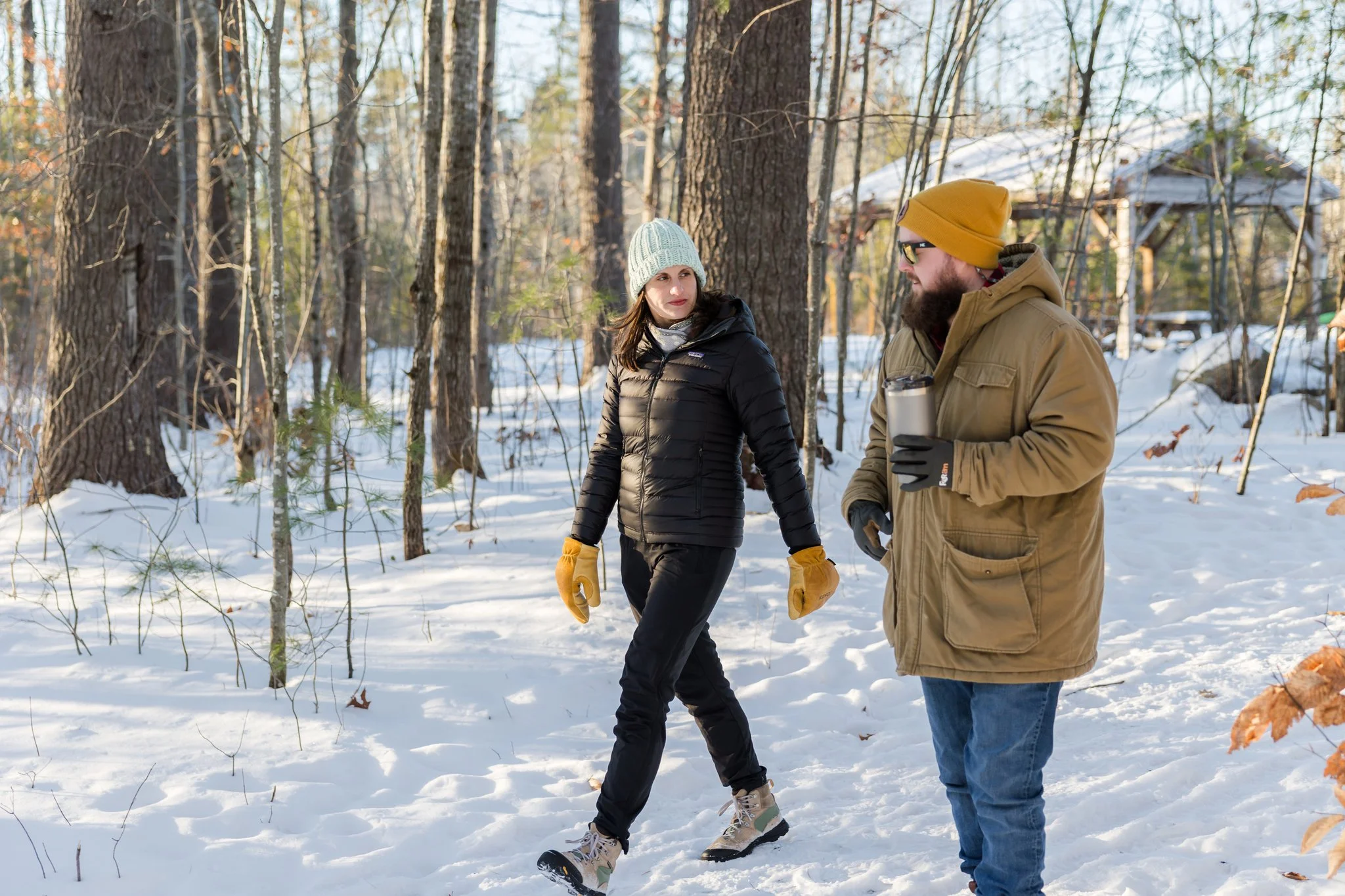
Walk and Talk Therapy in Research:
Many studies highlight the efficacy of Walk & Talk Therapy treatment for mental health diagnoses compared to traditional therapeutic models and settings:
-
In a recent study, men diagnosed with depression who received outdoor walk and talk therapy showed comparable improvements in depressive symptoms to those in traditional therapy, with greater reduction in overall stress and anxiety levels. Exposure to nature has known anti-depressant effects on the brain, and walking releases endorphins; therefore, walking outdoors can offer depressed clients a therapy setting with a powerful combination of mood-boosting properties.
-
A 2021 systematic review found that taking walks outdoors were particularly effective at reducing anxiety symptoms. The body’s physiological stress responses to walking in nature have been well-researched and documented: walking in nature tends to lower the body’s stress response (cortisol levels and heart rate), and the calming influence of nature (greenery, fresh air, open spaces) when combined with the rhythmic motion of walking has led people to feeling less anxious, calmer, and more present during and after group walks. Research participants also reported improvements in their focus in the present-moment and an increase in positive mood during and after walking.
-
A 2025 study in the Journal of Environmental Psychology highlighted that nature-based interventions, like guided nature walks, hiking, or outdoor recreation therapy, in therapeutic treatment produced a moderate reduction in PTSD symptoms overall. Innovative trauma therapies leverage bilateral movement to facilitate emotional desensitization and grounding in the present moment while engaging in trauma processing. Walking and talking is a way in which one can engage with this, and incorporating a peaceful nature setting as a backdrop for these kinds of therapy sessions can reduce hyperarousal, improve mood, and promote feelings of safety and control clients working through trauma.
-
People struggling with loneliness, relationship loss, or interpersonal problems have reported that nature walks alongside another person help them feel less alone and less isolated. People report feeling more connected and understood by others, and joint or group walking activities have been shown to strengthen bonds and created shared positive experiences that help people learn to trust again after being hurt by relationships.